A Slow Road Through the World's Largest Vineyard
The Languedoc stretches from the Rhône to the Pyrenees, the largest vineyard on earth. Here is how to tackle it without spending your whole trip behind the wheel.
- Flag
-

- ISO code
- FR
- Population
- 248,252
- Currency
- EUR
- Timezone
- Europe/Paris
A Slow Road Through the World’s Largest Vineyard
The Languedoc covers roughly 30% of every vineyard in France. It is not a wine region you visit for an afternoon. It is a wine region the size of a small country, stretching from the Rhône to the Pyrenees, and the single most useful fact you need before you book anything is this: you cannot base yourself in one place and day trip the whole thing. The visitors who try that end up spending four hours in the car at 38°C, staring at a Cathar castle from the parking lot, and calling it a holiday. Do not be them.
The Languedoc rewards the independent road-tripper who wants to connect medieval villages without spending every morning packing a suitcase. It suits the wine tourist who wants value-driven domaines, not grand châteaux with a tasting fee that buys a case. It works for the family who wants a self-catering villa, a low-key beach, and the rhythm of morning markets and long lunches. It is not for anyone who needs five-star service, late clubs, or the illusion that a rural bus will get them to a hilltop ruin at noon.
The Languedoc demands a framework. So here is the framework.
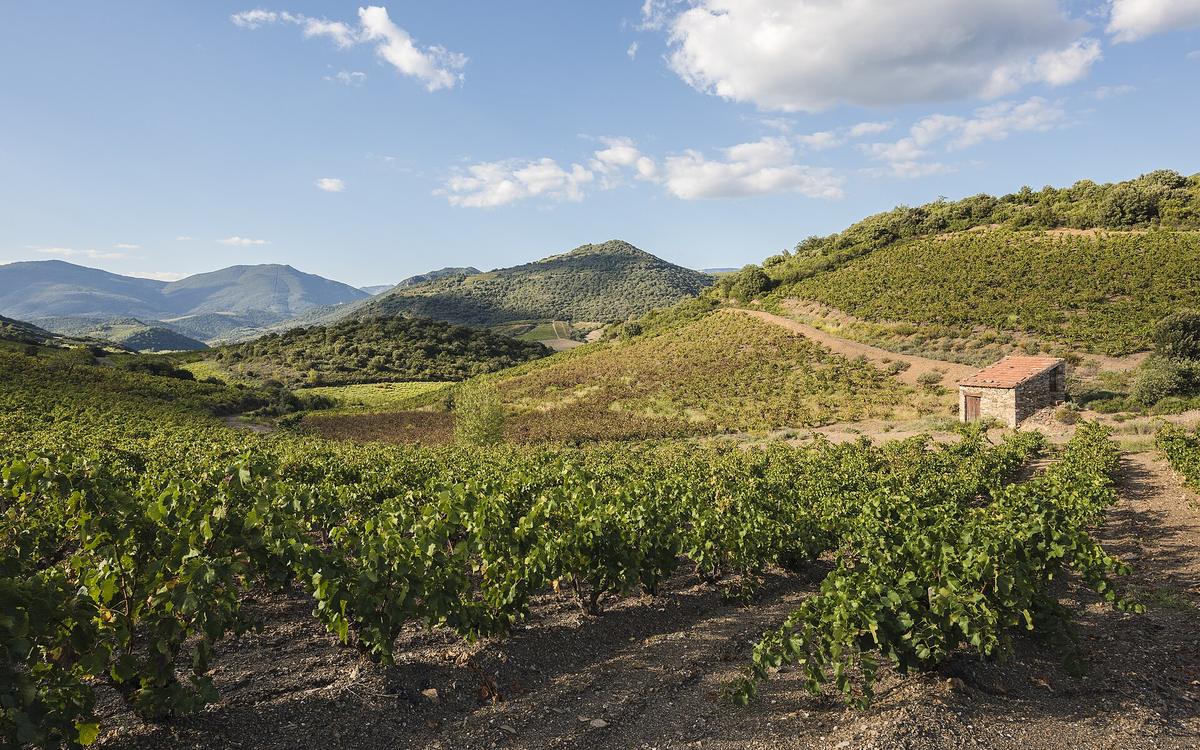

- Share of French Vineyard Area: ~30%
- AOC/AOP Appellations: 23 (as of 2024)
- Annual Wine Production: ~1.3 billion bottles (average range 1.2, 1.5 billion)
- Minimum Days Needed: 5 days
- Peak Season: July and August, temperatures regularly hit 35°C, coastal populations multiply by ten
- Avoid Window: Second half of August (A9 exodus), Feria de Nîmes (Pentecost), Carcassonne July 14 fireworks
How to Split Your Time: Two Bases, Not One
Book two bases. One inland, one coastal. Spend three nights at the first, two at the second. That gives you a full day to explore each zone without driving more than 45 minutes on any given day. A 5-day trip with a single base near the coast forces 90-minute drives inland each way in July heat. That is not a holiday. That is a commute with traffic.
Choose Your Inland Base
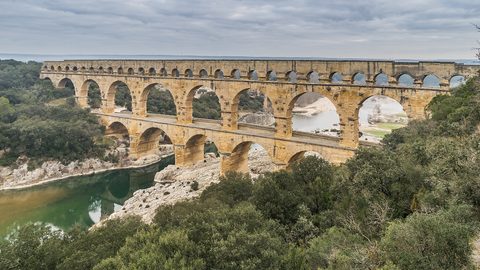
Pick your inland base first. The best options sit inside the vineyards themselves. Pézenas works well for the western appellations: Faugères is 25 km northwest of Béziers, and the schist soil vineyards around the village of Laurens are walkable from a rented stone house. Lagrasse puts you into the Corbières hills with the abbey at your doorstep and the dramatic gorge of Minerve a 30-minute drive north. Saint-Guilhem-le-Désert is tighter on accommodation options but gives you the narrow gorge of the Gellone valley and the Terrasses du Larzac rising behind it. Uzès is the most polished choice, with a Saturday market that justifies a full morning and the Pont du Gard 20 minutes south. Arrive at the Pont du Gard parking lot by 08:30 in summer. Book online in advance. After 10:00 the queues hit 45 minutes and the arches are backlit and flat.
Where to Stay on the Coast
For the coastal base, Sète is the right choice for anyone who eats. Walk the morning market at Les Halles de Narbonne (open daily until 13:30) on the way south, then drop into Sète for the working port, the canals, and the harbour-side vendors selling tielles sétoises cold. Eat them standing up. The alternative is a villa near Bouzigues on the Bassin de Thau, where the oyster shacks serve huîtres de Bouzigues with a glass of Picpoul de Pinet at picnic tables on the water. Do not drive yourself if you plan to taste. French law sets the blood alcohol limit at 0.5 g/L for drivers, 0.2 g/L for those with less than three years on their licence. Hire a vigneron-guide for a half-day or ride a bicycle along the Canal du Midi towpath instead.
The Hard Truth About Summer Heat
July and August are punishing. The sun hits hard by 10:30, and from 14:00 to 16:00 most of the region shuts down. Shops close. Restaurants lock the door at 14:00 and do not reopen until 19:30. This is not a bug. It is the rhythm of the place. Plan your day around it. Morning markets from 08:00 to 12:00. A long lunch with a carafe of local wine. A slow afternoon beside a pool or inside a stone house with the shutters closed. A visit to a domain at 17:00 when the light softens and the winemaker has cooled down. April through June and October are the best months for domaine visits. September has harvest, which means many domaines close to visitors or cannot host tastings, and the A9 fills with the French and European exodus in the second half of August.
What to Do When You Are Not Drinking Wine
The Languedoc gives you five layers of history layered on top of each other: Roman, medieval Cathar, canal-era, and modern. Do not try to see all of them in one trip. Pick two.
Roman Monuments
For Roman monuments, base a day out of Nîmes. The Les Arènes de Nîmes amphitheatre is the best preserved in France. Book ahead for the guided rooftop access. The La Maison Carrée temple is pristine, but its interior is a cinema screening a 25-minute film. Skip the film and walk the Jardins de la Fontaine instead. Nîmes is 30 minutes from Montpellier by TER train, which solves the rental car problem for that day.
Cathar Castles
For Cathar castles, pick one, not three. Château de Peyrepertuse sits on a knife-edge ridge and requires a strenuous climb. Château de Quéribus is high and isolated, the last stronghold to fall. Minerve is car-free and sits in a dramatic limestone gorge. None of them have shade. Arrive by 09:00. Carry two litres of water per person. Do not attempt a loop of all three in a single day from a coastal base in August. That is the common mistake and it ruins the trip.
Canal du Midi and Beyond
For the Canal du Midi, see the Fonseranes 9 locks in Béziers. The locks drop the canal 21.5 metres in 300 metres. Walk the towpath under the plane trees. For a longer escape, the Cirque de Navacelles is a collapsed limestone canyon bowl that requires a vertiginous drive down and a slower drive back up. Save it for a cooler day in October.
Eating On The Languedoc Schedule
Lunch is the main meal. Dinner is secondary. Inland village restaurants serve lunch only and close by 14:00. If you are out at a Cathar castle all day, you will find dinner requires driving to a larger town. Plan for that. Pack a picnic from the morning market. Cassoulet de Castelnaudary is the canonical version of the bean and duck confit dish, but it belongs to winter. In summer, order bourride de baudroie à la sétoise, the monkfish stew thickened with aioli, and a plate of Pélardon goat cheese drizzled with thyme honey. The small, spiced mutton pies from Pézenas, the petits pâtés, are a legacy of Lord Clive and work as a road snack.

Getting Around Without Regret
A rental car is non-negotiable for exploring beyond the main cities. The rural bus network is skeletal. Book automatic cars weeks in advance. Manuals are easy to find. Automatics are not. The thing that trips visitors up is the priorite a droite rule in villages. Cars shooting out from tiny side streets on the right have the right of way, no matter what the main road says. Watch for it. And download offline maps before you head into the Haut Languedoc backcountry. 4G coverage drops to zero in the deep gorges of the Caroux and in many Cathar castle car parks.
Arriving by Air or Rail
For arriving, fly into Montpellier Mediterranee for the eastern half of the region or Toulouse Blagnac for the western half. Both connect by tram or bus to their city centres. Carcassonne airport handles seasonal Ryanair flights. A taxi into the Cite costs 15, 20 euros and takes 15 minutes. The TGV from Paris reaches Montpellier Sud de France in 3 hours 10 minutes, Beziers city centre in 3 hours 45, and Narbonne city centre in 4 hours 00. If you arrive by train, pick up your car at the station.
When To Skip The Drive Altogether
If you want to taste wine without driving, base yourself in a wine village with multiple domaines within walking distance. Faugeres (schist soil) has a cluster of producers in the village itself. The Terrasses du Larzac are scattered, but a hired driver or a bicycle on quiet roads works. Every tasting room provides a spittoon. Use it. It is expected, not rude.
More on Montpellier
-
 Visiting French Wineries Appointments Etiquette and What It Costs
French winery visits differ sharply from New World cellar doors. Appointments, modest fees, and knowing when to spit are the norm, especially in Languedoc's working domaines.
Visiting French Wineries Appointments Etiquette and What It Costs
French winery visits differ sharply from New World cellar doors. Appointments, modest fees, and knowing when to spit are the norm, especially in Languedoc's working domaines.
-
 Vendange Harvest Season in France What It Means for Visitors
France's vendange transforms wine regions from late August. Domaines close to visitors, tractors block roads, but the harvest energy is unforgettable if you know where to go.
Vendange Harvest Season in France What It Means for Visitors
France's vendange transforms wine regions from late August. Domaines close to visitors, tractors block roads, but the harvest energy is unforgettable if you know where to go.
-
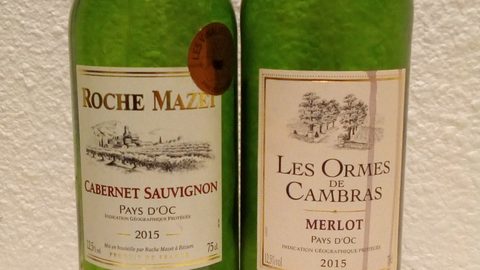 Reading a French Wine Label Without the Grape Name on the Front
French wine labels name places, not grapes. Learn to decode AOC Languedoc, Corbières, and Pic Saint-Loup bottles using appellation hierarchy, producer name, and bottling phrases.
Reading a French Wine Label Without the Grape Name on the Front
French wine labels name places, not grapes. Learn to decode AOC Languedoc, Corbières, and Pic Saint-Loup bottles using appellation hierarchy, producer name, and bottling phrases.
-
 Wine Touring Without a Car Trains Bikes and Drivers in Languedoc
Languedoc demands a car for deep exploration, but the TER rail spine, Canal du Midi bike paths, and local drivers open up serious wine touring from Montpellier, Béziers, and Narbonne.
Wine Touring Without a Car Trains Bikes and Drivers in Languedoc
Languedoc demands a car for deep exploration, but the TER rail spine, Canal du Midi bike paths, and local drivers open up serious wine touring from Montpellier, Béziers, and Narbonne.
-
 Natural Wine in France What It Means and Where to Taste It in Montpellier
Natural wine in France means wild-yeast fermentation and minimal additives, and Montpellier's Écusson cavistes and Pic Saint-Loup domaines are the Languedoc's best entry points.
Natural Wine in France What It Means and Where to Taste It in Montpellier
Natural wine in France means wild-yeast fermentation and minimal additives, and Montpellier's Écusson cavistes and Pic Saint-Loup domaines are the Languedoc's best entry points.
-
 Languedoc Wine Festivals Calendar Month by Month
A month-by-month calendar of Languedoc wine festivals, from Montpellier's summer Estivales to village fête bodegas and the autumn vendanges celebrations.
Languedoc Wine Festivals Calendar Month by Month
A month-by-month calendar of Languedoc wine festivals, from Montpellier's summer Estivales to village fête bodegas and the autumn vendanges celebrations.
-
 Cathar Country Castles and History in Languedoc
The history of the Cathars in Languedoc and a guide to visiting the vertiginous castles of Peyrepertuse, Quéribus, and Minerve across the Corbières hills.
Cathar Country Castles and History in Languedoc
The history of the Cathars in Languedoc and a guide to visiting the vertiginous castles of Peyrepertuse, Quéribus, and Minerve across the Corbières hills.
-
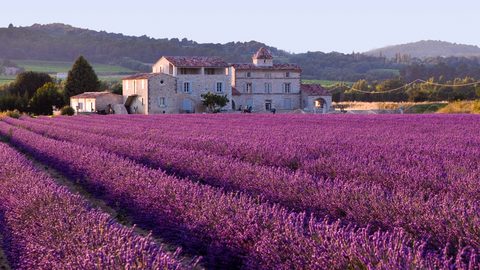 Languedoc or Provence Which South of France to Visit
Languedoc or Provence: a direct comparison of wine regions, costs, crowds, beaches, and medieval villages to help you choose your south of France.
Languedoc or Provence Which South of France to Visit
Languedoc or Provence: a direct comparison of wine regions, costs, crowds, beaches, and medieval villages to help you choose your south of France.
Common Questions
How many days do I need for a Languedoc road trip?
Minimum five days. Split them between an inland historic base (three nights) and a coastal base (two nights). That gives you time to explore each zone without spending the entire trip driving.
Can I do the Languedoc without a car?
Not for deep exploration. The rural bus network is skeletal. You can reach Nimes, Montpellier, and Carcassonne by TER train, but connecting from those cities to the vineyards and Cathar castles requires a car. Base yourself in a wine village with walkable domaines if you want to avoid driving between tastings.
What is the best month to visit the Languedoc?
May, June, and October. April is also good but cooler. July and August are punishingly hot (35°C regular), crowded on the coast, and expensive. September is harvest season, which means many domaines close to visitors.
Is English widely spoken in the Languedoc?
On the coast, yes. In rural Minervois and Corbieres villages, no. Basic French is required to order beyond a menu. Download a translation app and learn numbers and greetings.
What is the mosquito situation?
Aggressive from June onwards in the Camargue and Etang de Thau area. A repellent is essential for any terrace evening. Do not skip it.
How do I avoid the worst traffic?
Avoid the second half of August entirely, when the A9 becomes a parking lot during the French and European exodus. Also avoid the Feria de Nimes (Pentecost weekend) and Carcassonne's July 14 fireworks. On the coast, the D600 and D62 roads turn a 20-minute drive into 90 minutes in July and August.
Can I visit Cathar castles and the beach on the same day?
Not realistically. The inland castles sit high in the Corbieres hills, 90 minutes from the coast. In summer heat, the drive exhausts you and the castle climb exhausts you further. Pick one per day.
Read next
-
 Languedoc Hotels Town Stays Château Rooms and Chain Options Reviewed
Languedoc hotels range from Montpellier Écusson boutiques to Corbières château rooms and Béziers chain stays with easy parking. Summer availability disappears fast.
Languedoc Hotels Town Stays Château Rooms and Chain Options Reviewed
Languedoc hotels range from Montpellier Écusson boutiques to Corbières château rooms and Béziers chain stays with easy parking. Summer availability disappears fast.
-
 Where to Base a Languedoc Wine Trip Town Village or Domaine Stay
Montpellier delivers evening energy, Pézenas and Uzès offer market-town charm, and a Corbières domaine stay means zero driving after tastings. The smart move is splitting your base.
Where to Base a Languedoc Wine Trip Town Village or Domaine Stay
Montpellier delivers evening energy, Pézenas and Uzès offer market-town charm, and a Corbières domaine stay means zero driving after tastings. The smart move is splitting your base.
-
 Flying into Languedoc via Montpellier, Toulouse, Carcassonne and Béziers
Montpellier and Toulouse are the main gateways to Languedoc, while Carcassonne and Béziers offer seasonal budget flights closer to the vineyards.
Flying into Languedoc via Montpellier, Toulouse, Carcassonne and Béziers
Montpellier and Toulouse are the main gateways to Languedoc, while Carcassonne and Béziers offer seasonal budget flights closer to the vineyards.
-
 Montpellier Things to Do Beyond Wine Tasting and the Écusson Maze
Montpellier offers Romanesque churches, France's oldest botanical garden, and a major fine arts museum all within a walkable honey-stone old town.
Montpellier Things to Do Beyond Wine Tasting and the Écusson Maze
Montpellier offers Romanesque churches, France's oldest botanical garden, and a major fine arts museum all within a walkable honey-stone old town.
-
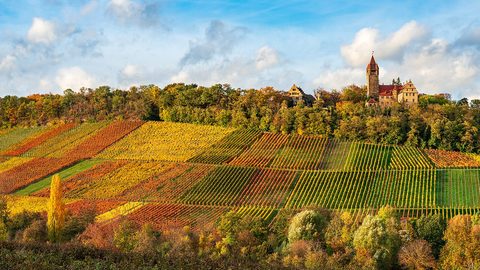 Best Time to Visit Montpellier and the Languedoc Coast
May, June and September offer warm days without the August traffic gridlock, 35°C heat, and packed coastal resorts.
Best Time to Visit Montpellier and the Languedoc Coast
May, June and September offer warm days without the August traffic gridlock, 35°C heat, and packed coastal resorts.
-
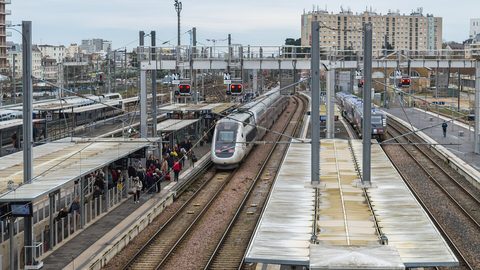 Getting Around Montpellier and Languedoc Wine Country Without Stress
A rental car is essential for inland Languedoc, but Montpellier's trams and regional TER trains serve the coast and cities well.
Getting Around Montpellier and Languedoc Wine Country Without Stress
A rental car is essential for inland Languedoc, but Montpellier's trams and regional TER trains serve the coast and cities well.
-
 French Wine Regions and How a Trip Through Them Actually Works
How to plan a multi-region French wine trip that connects the dots between vineyards without spending every day driving, with Languedoc as the value-driven heart.
French Wine Regions and How a Trip Through Them Actually Works
How to plan a multi-region French wine trip that connects the dots between vineyards without spending every day driving, with Languedoc as the value-driven heart.
-
Visiting French Wineries Appointments Etiquette and What It Costs
French winery visits differ sharply from New World cellar doors. Appointments, modest fees, and knowing when to spit are the norm, especially in Languedoc's working domaines.
-
Vendange Harvest Season in France What It Means for Visitors
France's vendange transforms wine regions from late August. Domaines close to visitors, tractors block roads, but the harvest energy is unforgettable if you know where to go.