The Best Day Trips from Montpellier by Train and by Car
Roman Nîmes, canal-laced Sète, and the walled crusader port of Aigues-Mortes all sit within an hour of Montpellier by train or car.
Day Trips from Montpellier: Train or Car
The question is not which places are worth seeing from Montpellier. The question is which ones you can reach, enjoy, and return from without spending four hours in a hot car cursing the A9. The Languedoc region looks compact on a map. It is not. A single afternoon can take you from a Roman amphitheatre to a working oyster harbour to a limestone gorge, but only if you pick the right transport and the right target. The train-viable trips separate cleanly from the car-essential ones, honest drive times in peak August conditions matter more than distance, and the famous destination is sometimes not worth the turnaround.
Train Trips That Actually Work: Nîmes and Sète
Nîmes By Rail: The Amphitheatre And Beyond
Two destinations justify skipping the rental car entirely. Nîmes is 27 to 35 minutes by TER train from Montpellier, direct, no reservation needed. The train drops you within a ten-minute walk of Les Arènes de Nîmes, the best-preserved Roman amphitheatre in France. Budget for the guided rooftop access. Book it online before you leave. The interior climb is steep and exposed; take the 09:00 opening in summer or skip the midday slot. After the amphitheatre, walk six minutes to the Maison Carrée, a pristine Roman temple now screening a short film inside. The Jardins de la Fontaine are a free, shaded escape on the same walk. Return whenever you want; the TER runs roughly hourly until 22:00. The downside: the train platform at Montpellier Saint-Roch gets crowded in July. The 45 to 55 minute drive on the A9 during afternoon heat is slower than the train in every scenario. Take the train.
Sète: Harbour Life In Under Twenty Minutes
Sète is even closer: 15 to 20 minutes on the TER. You arrive at the edge of the canal and the working port. The destination here is not a single monument but the waterfront walk, the market at the water jousting arena, and a cold tielle sétoise from a harbour vendor. The town has an unpolished, gritty character that contrasts with Montpellier's elegance. Do not expect beaches; the sand strips are a thirty-minute walk north, and the coastal campsites wall off the D600 in August. Sète works best as a half-day food trip. Buy oysters at the Etang de Thau shacks in Bouzigues on the return drive if you have a car. Without one, the train still delivers a solid four hours of harbour life. Both Nîmes and Sète avoid the midday closure trap: restaurants serve lunch until 14:00 and re-open for dinner at 19:30.


Car Trips Worth the Windshield Time: Saint-Guilhem, Cirque De Navacelles, and the Pont Du Gard
Saint-Guilhem-le-Désert And The Gorge
For the inland gorges and the Roman aqueduct, you need a car. The tradeoff is that the drive itself is part of the experience, and the heat is not a dealbreaker if you time it right. Saint-Guilhem-le-Désert sits in a narrow gorge 35 to 45 minutes northwest of Montpellier on the D979 and D986. The abbey village is a UNESCO site, but the real draw is the box canyon rising behind the church. Park in the paid lot at the village entrance by 09:00; by 10:30 the lot fills and you face a long walk from the overflow field in open sun. The village has no dinner options; restaurants serve lunch only until 14:00. Plan this as a morning trip.
Cirque De Navacelles: The Limestone Bowl
Combine Saint-Guilhem with the Cirque de Navacelles, a further 45-minute drive north on winding roads. The cirque is a collapsed limestone bowl you view from a vertiginous cliff edge. The drive down into the bowl is switchbacked and slow. The reward is a view no train can deliver. The downside: 4G coverage drops to zero in the deep Caroux gorges. Download offline maps before you leave Montpellier. In August the heat bakes the stone; bring two litres of water per person and a hat.
Pont Du Gard: Aqueduct Without A Station
The Pont du Gard is a 35 to 45 minute drive on the D979. Park online before you arrive; the 2024 booking system capped capacity at the main lot and walk-up tickets were not guaranteed by midday. The paid site includes the museum, the cinema, and the riverbank walks. Cross the top of the aqueduct for the full scale of the structure. There is no train station here. The nearest is Nîmes, followed by a 25-minute bus or taxi ride. Without a car, the combined time and cost makes this a poor day trip. With a car, it is a clean morning or late afternoon visit. Skip noon to 15:00 entirely; the exposed stone deck is punishing at 35 degrees.
Coastal and Lagoon Options: Camargue and Etang De Thau
The Camargue: Marshes, Horses, And Mosquitoes
The Camargue Regional Natural Park covers 1,000 square kilometres of flat marshland, white horses, and pink flamingos. The drive from Montpellier to Saintes-Maries-de-la-Mer takes 50 to 60 minutes on the D570 and D66. There is no train station in Saintes-Maries. The nearest rail access is Arles, then a bus connection. With a car, the park is reachable for a half-day. The mosquitoes are aggressive from June onward. Pack repellent. The coastal D62 road becomes a solid traffic wall in July and August; a 20-minute drive from the park entrance to the village can stretch to 90 minutes. Go on a weekday before 09:00 or skip it. The Camargue is not a relaxed afternoon destination. It is a destination for a specific birdwatching or horse-riding activity that justifies the drive time.
Etang De Thau: Oysters On The Lagoon
The Etang de Thau is a better all-around bet. Mèze and Bouzigues are 20 to 30 minutes from Béziers on the D613, and 30 to 40 minutes from Montpellier. The lagoon produces the briny Huîtres de Bouzigues served at waterside shacks with a glass of Picpoul de Pinet. The train does not reach the villages directly; the nearest station is Sète or Agde. With a car, you can stop at three or four oyster producers along the shore in an afternoon. The tramontane wind can blow at 90 km/h here, making a terrace meal miserable. Check the wind forecast before you drive out. If the tramontane is blowing, skip the lagoon and head inland to the gorge villages.


The Lot is Not a Day Trip: a Necessary Warning
The village of Saint-Cirq-Lapopie, the caves of Pech Merle, and the pilgrimage site of Rocamadour belong to the Lot department. They are not day trips from Montpellier. Saint-Cirq-Lapopie is a two and a half hour drive each way, minimum. Cahors is the nearest rail hub. Rocamadour has its own TER station but the connection from Montpellier involves a change in Toulouse and takes over four hours each way. Pech Merle requires a timed, pre-booked ticket; the cave stays at a constant 13 degrees, but the drive from Montpellier is a long haul on the autoroute. In the second half of August, the A9 becomes a parking lot during the French exodus. Attempting a single-day return to the Lot from Montpellier means 5 to 6 hours on the road for two to three hours of sightseeing. Do not attempt it. The Lot is a three-day base, not a day trip.
Common Questions
Which day trip from Montpellier has the least travel time?
Sète. The TER train takes 15 to 20 minutes direct from Montpellier Saint-Roch. You arrive at the canal and the port. The trip requires no advance booking, no parking, and no bus connection.
Is the Pont du Gard accessible by train from Montpellier?
No direct station. The nearest station is Nîmes, then a 25 minute bus or taxi ride. With the connection time and cost, the total travel exceeds what a car does in 35 to 45 minutes. Take a car or skip it.
Should I visit the Camargue in August?
Only if you arrive before 09:00 on a weekday. The D62 road turns into a 90 minute traffic wall by midday. The mosquitoes are aggressive. The heat on the open marsh is relentless. A morning visit works; an afternoon visit does not.
Can I combine Saint-Guilhem-le-Désert and the Cirque de Navacelles in one day?
Yes, with a car and an early start. The drive between them is 45 minutes on winding roads. Start at Saint-Guilhem by 09:00, leave by 11:30, reach the cirque by 12:15. The heat peaks between 13:00 and 16:00, so carry water and a hat.
Read next
-
 Languedoc Hotels Town Stays Château Rooms and Chain Options Reviewed
Languedoc hotels range from Montpellier Écusson boutiques to Corbières château rooms and Béziers chain stays with easy parking. Summer availability disappears fast.
Languedoc Hotels Town Stays Château Rooms and Chain Options Reviewed
Languedoc hotels range from Montpellier Écusson boutiques to Corbières château rooms and Béziers chain stays with easy parking. Summer availability disappears fast.
-
 Where to Base a Languedoc Wine Trip Town Village or Domaine Stay
Montpellier delivers evening energy, Pézenas and Uzès offer market-town charm, and a Corbières domaine stay means zero driving after tastings. The smart move is splitting your base.
Where to Base a Languedoc Wine Trip Town Village or Domaine Stay
Montpellier delivers evening energy, Pézenas and Uzès offer market-town charm, and a Corbières domaine stay means zero driving after tastings. The smart move is splitting your base.
-
 Flying into Languedoc via Montpellier, Toulouse, Carcassonne and Béziers
Montpellier and Toulouse are the main gateways to Languedoc, while Carcassonne and Béziers offer seasonal budget flights closer to the vineyards.
Flying into Languedoc via Montpellier, Toulouse, Carcassonne and Béziers
Montpellier and Toulouse are the main gateways to Languedoc, while Carcassonne and Béziers offer seasonal budget flights closer to the vineyards.
-
 Montpellier Things to Do Beyond Wine Tasting and the Écusson Maze
Montpellier offers Romanesque churches, France's oldest botanical garden, and a major fine arts museum all within a walkable honey-stone old town.
Montpellier Things to Do Beyond Wine Tasting and the Écusson Maze
Montpellier offers Romanesque churches, France's oldest botanical garden, and a major fine arts museum all within a walkable honey-stone old town.
-
 Best Time to Visit Montpellier and the Languedoc Coast
May, June and September offer warm days without the August traffic gridlock, 35°C heat, and packed coastal resorts.
Best Time to Visit Montpellier and the Languedoc Coast
May, June and September offer warm days without the August traffic gridlock, 35°C heat, and packed coastal resorts.
-
 Getting Around Montpellier and Languedoc Wine Country Without Stress
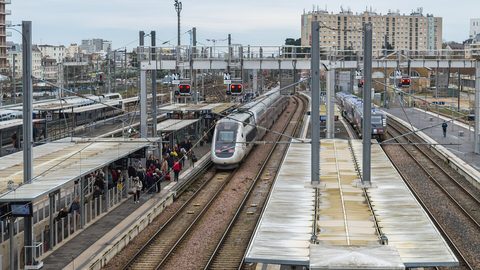
A rental car is essential for inland Languedoc, but Montpellier's trams and regional TER trains serve the coast and cities well.
Getting Around Montpellier and Languedoc Wine Country Without Stress
A rental car is essential for inland Languedoc, but Montpellier's trams and regional TER trains serve the coast and cities well.
-
 French Wine Regions and How a Trip Through Them Actually Works
How to plan a multi-region French wine trip that connects the dots between vineyards without spending every day driving, with Languedoc as the value-driven heart.
French Wine Regions and How a Trip Through Them Actually Works
How to plan a multi-region French wine trip that connects the dots between vineyards without spending every day driving, with Languedoc as the value-driven heart.
-
 Visiting French Wineries Appointments Etiquette and What It Costs
French winery visits differ sharply from New World cellar doors. Appointments, modest fees, and knowing when to spit are the norm, especially in Languedoc's working domaines.
Visiting French Wineries Appointments Etiquette and What It Costs
French winery visits differ sharply from New World cellar doors. Appointments, modest fees, and knowing when to spit are the norm, especially in Languedoc's working domaines.
-
 Vendange Harvest Season in France What It Means for Visitors
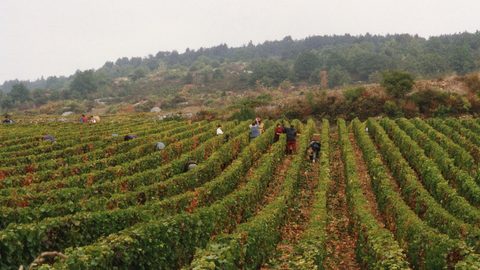
France's vendange transforms wine regions from late August. Domaines close to visitors, tractors block roads, but the harvest energy is unforgettable if you know where to go.
Vendange Harvest Season in France What It Means for Visitors
France's vendange transforms wine regions from late August. Domaines close to visitors, tractors block roads, but the harvest energy is unforgettable if you know where to go.