How to Decode a French Wine Label When There Is No Grape Listed
French wine labels name places, not grapes. Learn to decode AOC Languedoc, Corbières, and Pic Saint-Loup bottles using appellation hierarchy, producer name, and bottling phrases.

You Are Looking at a Shelf of French Wine with No Grape Names
You pick up a bottle in a Montpellier supermarket. The front label says "Corbières" in bold letters. No Cabernet Sauvignon. No Chardonnay. Just a village name and a château name. You have no idea what is inside. That is normal. French wine labels work on a hierarchy, and the southern grocery shelf is the best place to learn it. Once you know which level you are holding, you know what to expect.
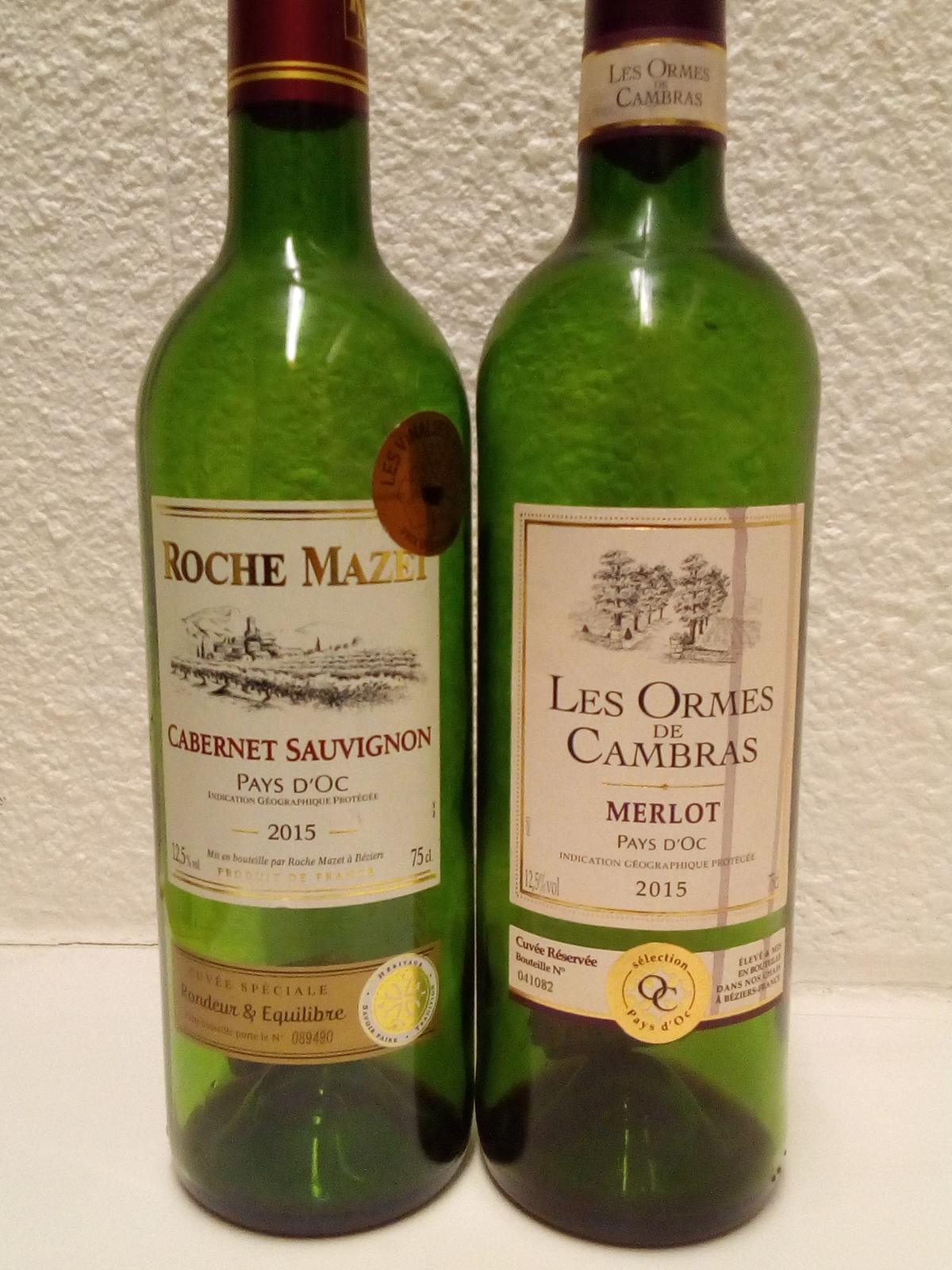
There are three tiers. A Vin de France bottle can list the grape on the front label, as long as it is 100% that variety. An IGP Pays d'Oc bottle also shows the grape, and almost always does: look for bottles saying "Merlot" or "Sauvignon Blanc" on the front. An AOC bottle cannot list the grape on the front label at all, except by special permission. That is the rule. You read the place name instead.
The AOC Label Tells You Place, Not Grape
Why the Appellation Rules Matter
Appellation d'Origine Contrôlée (AOC) or Appellation d'Origine Protégée (AOP) guarantees origin, grape varieties, minimum ripeness, maximum yields, vine training, and winemaking methods. For AOP reds from this region, the yield limit is 50 hL/ha and minimum alcohol is 11.5% by volume. The appellation rules specify which grapes are allowed. Reds require at least two varieties from Syrah, Mourvèdre, and Grenache, with Carignan and Cinsault allowed as supporting grapes. You do not need to see them on the label. The place tells you the blend style.
Three Appellations to Memorise
Take a Corbières bottle. The appellation is a specific zone of hills and scrubland in the south. The wine inside is a blend of Carignan, Syrah, Grenache, and Mourvèdre, but the precise mix changes by domaine and by vintage. Buy Corbières for the earthy, garrigue-scented character, not for a single grape profile. A La Clape bottle comes from a limestone massif near the coast. Expect richer, more concentrated reds. The appellation rules permit white grapes too, which is unusual for a cru here. Pic Saint-Loup is a sub-appellation in the northern hills. Cooler nights preserve acidity. The reds show fresher, peppery Syrah. Those three names tell you more than any grape sticker could. While the Languedoc vineyards roll south toward the Pyrenees, the road west leads to Albi, where the region’s red-brick cathedral and Toulouse-Lautrec collection offer a different kind of sensory immersion.
What Mis En Bouteille Actually Means
Flip the bottle and read the fine print on the back. "Mis en bouteille au domaine" means the wine was grown, made, and bottled on the estate that grew the grapes. That is the mark of a small producer who controls everything. "Mis en bouteille au château" means the same thing, but the estate is called a château. Both are good signs. Buy these.
"Mis en bouteille par" followed by a company name means a négociant bought grapes, must, or finished wine and bottled it themselves. That is not automatically bad: serious négociants source excellent fruit. But it is a different product from a domaine bottle. If you want the direct vision of the grower, find domaine bottling. If you see "Mis en bouteille par" and the named company is a supermarket chain, put the bottle back. The wine is a commodity and you should expect supermarket quality.
.jpg)
Read next
-
 Languedoc Hotels Town Stays Château Rooms and Chain Options Reviewed
Languedoc hotels range from Montpellier Écusson boutiques to Corbières château rooms and Béziers chain stays with easy parking. Summer availability disappears fast.
Languedoc Hotels Town Stays Château Rooms and Chain Options Reviewed
Languedoc hotels range from Montpellier Écusson boutiques to Corbières château rooms and Béziers chain stays with easy parking. Summer availability disappears fast.
-
 Where to Base a Languedoc Wine Trip Town Village or Domaine Stay
Montpellier delivers evening energy, Pézenas and Uzès offer market-town charm, and a Corbières domaine stay means zero driving after tastings. The smart move is splitting your base.
Where to Base a Languedoc Wine Trip Town Village or Domaine Stay
Montpellier delivers evening energy, Pézenas and Uzès offer market-town charm, and a Corbières domaine stay means zero driving after tastings. The smart move is splitting your base.
-
 Flying into Languedoc via Montpellier, Toulouse, Carcassonne and Béziers
Montpellier and Toulouse are the main gateways to Languedoc, while Carcassonne and Béziers offer seasonal budget flights closer to the vineyards.
Flying into Languedoc via Montpellier, Toulouse, Carcassonne and Béziers
Montpellier and Toulouse are the main gateways to Languedoc, while Carcassonne and Béziers offer seasonal budget flights closer to the vineyards.
-
 Montpellier Things to Do Beyond Wine Tasting and the Écusson Maze
Montpellier offers Romanesque churches, France's oldest botanical garden, and a major fine arts museum all within a walkable honey-stone old town.
Montpellier Things to Do Beyond Wine Tasting and the Écusson Maze
Montpellier offers Romanesque churches, France's oldest botanical garden, and a major fine arts museum all within a walkable honey-stone old town.
-
 Best Time to Visit Montpellier and the Languedoc Coast
May, June and September offer warm days without the August traffic gridlock, 35°C heat, and packed coastal resorts.
Best Time to Visit Montpellier and the Languedoc Coast
May, June and September offer warm days without the August traffic gridlock, 35°C heat, and packed coastal resorts.
-
 Getting Around Montpellier and Languedoc Wine Country Without Stress
A rental car is essential for inland Languedoc, but Montpellier's trams and regional TER trains serve the coast and cities well.
Getting Around Montpellier and Languedoc Wine Country Without Stress
A rental car is essential for inland Languedoc, but Montpellier's trams and regional TER trains serve the coast and cities well.
-
 French Wine Regions and How a Trip Through Them Actually Works
How to plan a multi-region French wine trip that connects the dots between vineyards without spending every day driving, with Languedoc as the value-driven heart.
French Wine Regions and How a Trip Through Them Actually Works
How to plan a multi-region French wine trip that connects the dots between vineyards without spending every day driving, with Languedoc as the value-driven heart.
-
 Visiting French Wineries Appointments Etiquette and What It Costs
French winery visits differ sharply from New World cellar doors. Appointments, modest fees, and knowing when to spit are the norm, especially in Languedoc's working domaines.
Visiting French Wineries Appointments Etiquette and What It Costs
French winery visits differ sharply from New World cellar doors. Appointments, modest fees, and knowing when to spit are the norm, especially in Languedoc's working domaines.
-
 Vendange Harvest Season in France What It Means for Visitors
France's vendange transforms wine regions from late August. Domaines close to visitors, tractors block roads, but the harvest energy is unforgettable if you know where to go.
Vendange Harvest Season in France What It Means for Visitors
France's vendange transforms wine regions from late August. Domaines close to visitors, tractors block roads, but the harvest energy is unforgettable if you know where to go.