Sète, the Gritty Working Port of Canals and Seafood
Sète delivers a working-port edge with canalside seafood, summer water-jousting tournaments, and briny oysters across the lagoon in Bouzigues, all 20 minutes by train from Montpellier.
- Flag
-

- ISO code
- FR
- Population
- 40,736
- Currency
- EUR
- Timezone
- Europe/Paris
Sète, the Gritty Working Port of Canals and Seafood
The hull of an oyster barge scrapes the concrete quay. A fisherman tosses a line from a rusted cleat. The air smells of diesel, salt and the briny edge of a lagoon that holds 8,000 tonnes of shellfish a year. This is Sète, and it has nothing to prove to the polished resort towns up the coast.
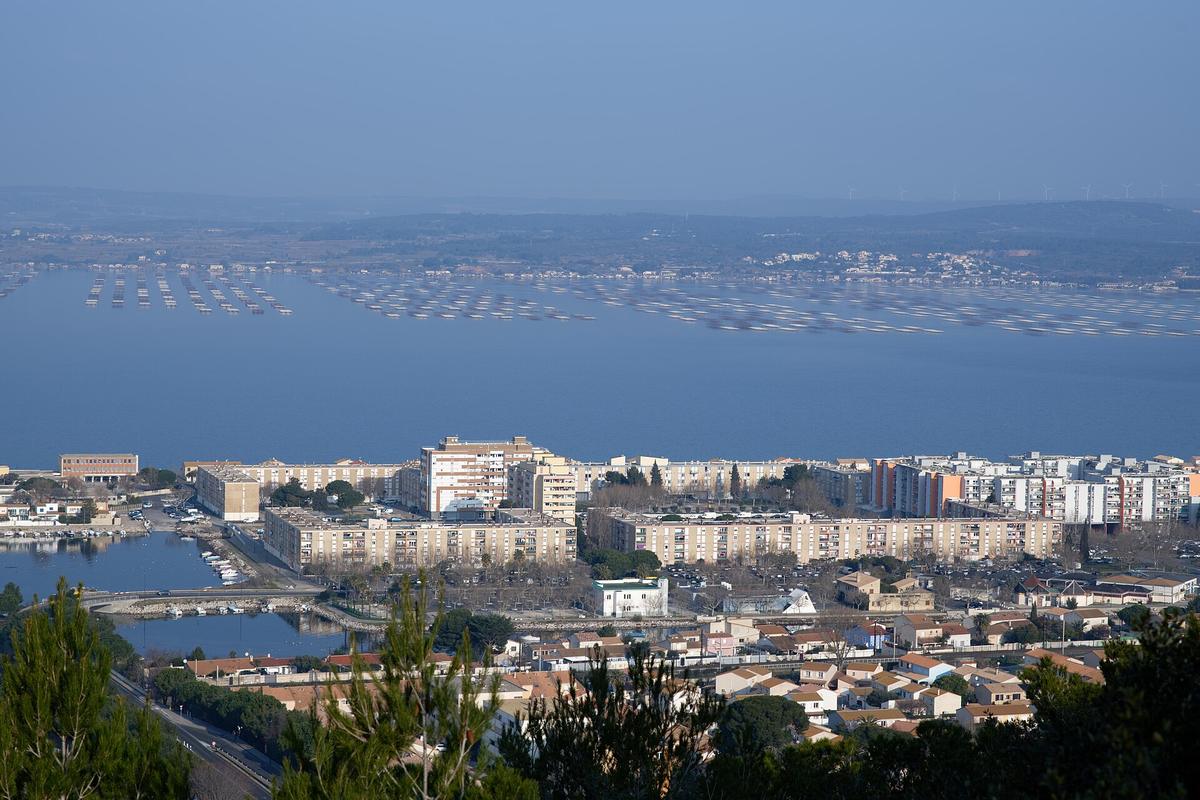
You come here for the opposite of manicured. Sète is the Languedoc's unvarnished maritime soul. Water jousting is not a tourist show but a working-class tournament. The best seafood comes from a hut across a 7,500-hectare lagoon. The signature pie is eaten cold from a paper bag while standing beside a canal. The town's 44,712 residents (2021 census, INSEE) live in a vertical wedge between the Mediterranean and Mont Saint-Clair, a summit that takes 20 minutes to climb on foot and rewards you with a view of the entire Bassin de Thau.
When to Climb Mont Saint-Clair
Skip the climb if the tramontane wind is howling above 50 km/h. Do it at sunset with a bottle of Picpoul de Pinet, the AOC white that hit 1,600 hectares under vine in 2023, and watch the oyster tables float in the shallows below.

Where to Eat Oysters: Cross the Lagoon to Bouzigues
Do not eat oysters in Sète town. The harbour restaurants serve them, but they are shipped from the same source you can reach in 15 minutes by car or 25 minutes by bike on the Voie Verte de la Via Rhôna. The source is Bouzigues, a village on the northern shore of the Étang de Thau that produces roughly 8,000 tonnes of oysters annually, according to the Comité Régional Conchylicole Méditerranée. Head for the quay where Les Délices de Thau, La Perle de Thau, Chez Tintin and Mas de la Plage run direct sales counters. Arrive by 11:00 to secure a table at a shack that has no booking system. Order a dozen huîtres de Bouzigues, a glass of Picpoul de Pinet (€6 to €12 retail, 11.5% to 13.5% ABV), and watch the oyster farmers sort their catch.
The lagoon itself is shallow, averaging 4.5 metres deep with a maximum of 32 metres. Its 500 producers farm the bivalves on tables suspended in the water column. The 2023 Picpoul harvest ran to about 90,000 hectolitres across the limestone plateau that borders the lagoon, the only place the grape is allowed under AOC rules dating from 2013. Drink it here, not at home. The wine's high acidity cuts the oyster's brine exactly as the producers intended.
Mosquito Warning for Étang de Thau
From June onwards, the Étang de Thau mosquitoes are aggressive. They swarm at dusk and persist through the evening. Bring a repellent with DEET and apply it before you sit down. The shacks provide citronella candles. Those will not stop the biting. Skip the evening terrace entirely if you forgot repellent; the experience turns miserable fast.
Water Jousting at the Cadre Royal and the Saint-Louis Festival
From 22 to 27 August 2026, the Saint-Louis festival turns the Canal Royal into a jousting arena. Two heavy boats rowed by eight to ten oarsmen each approach from opposite ends of the Cadre Royal. A jouster stands on a tintaine platform three metres above the water, holding a 2.8-metre lance. The goal is to knock the opponent into the canal. It is violent, loud and completely authentic. Sète has held this tournament for centuries, and the crowd knows the competitors by name.
Arrive by 14:00 to claim a spot on Quai du Maréchal de Lattre de Tassigny. The matches run through the afternoon. Do not pay for a seat in the temporary bleachers unless you want to be packed shoulder to shoulder with 2,000 other spectators. Stand on the quay wall instead, closer to the action and free. The 2026 edition marks the annual tournament; check the Sète tourist office website 72 hours before for the exact heat schedule, which can shift due to wind.
Théâtre de la Mer Summer Concerts
The same fortified venue that hosts the jousting transforms into the Théâtre de la Mer in summer. It is an open-air stage built into the waterfront fortifications. Book tickets online eight weeks in advance for the popular acts; the box office sells remaining seats two hours before showtime. The programme favours French rock and chanson, with occasional international jazz acts. Sound carries well because the stone walls act as an amphitheatre. Bring a cushion for the stone steps and a jacket; the sea breeze drops the temperature sharply after sunset.
Tielle Sétoise and the Harbour-Side Vendors
The tielle sétoise is a small, spicy octopus and tomato pie, 10 to 12 centimetres in diameter, with a shortcrust pastry casing that stays sturdy enough to eat out of hand. You want it cold, eaten within an hour of purchase, from a harbour-side vendor, not from a supermarket refrigerator case. The best version comes from bakeries on Quai de la Consigne and from the morning vendors who set up tables near the fish auction. Expect to pay €3 to €5 per unit. Buy two. You will finish the first before you reach the second.
The pie has no protected status, no PGI or PDO. That is fine. It means every baker does it differently. Some add cayenne. Some use a softer pastry. The only rule: the octopus must be tender and the tomato sauce must stain the crust red. Pair it with a glass of Picpoul or skip the wine and drink cold beer from the brasserie across the street.
Other Sète Dishes You Should Not Skip
Macaronade is pasta with beef and merguez in tomato sauce. Bourride de baudroie is monkfish stew thickened with aioli, not rouille. Rouille de seiche is cuttlefish in spicy tomato sauce. And the zézette de Sète is a shortbread biscuit made with white wine and olive oil that tastes of nothing else in France. The biscuit keeps for a week. Buy a dozen for the road.
.jpg)
| Item | Where to Eat | Wine Pairing | Price Range |
|---|---|---|---|
| Huîtres de Bouzigues (dozen) | Bouzigues quay shacks (Les Délices de Thau, Chez Tintin) | Picpoul de Pinet AOC | €12 to €18 |
| Tielle sétoise (each, cold) | Quai de la Consigne bakeries or fish auction vendors | Cold beer or Picpoul | €3 to €5 |
| Bourride de baudroie | Harbour restaurants on Quai de la Marine | Picpoul de Pinet or white Côtes de Thau | €18 to €25 |
| Zézette de Sète (per 100g) | Pâtisseries in the city centre | Sweet Muscat de Frontignan | €2 to €4 |
The Working Port: How to Navigate Without Getting Lost
Sète is not a walkable town in the way that Carcassonne's Bastide Saint-Louis is walkable. Its canals divide the city into islands connected by bridges, and the working port has no pedestrian-friendly signage. Use the Canal Royal as your spine. It runs from the train station to the Théâtre de la Mer and past the jousting venue. Everything you need sits within 500 metres of this waterway: the fish auction on Quai de la Consigne, the tielle vendors, the bars that serve macaronade.
If you are cycling, the Voie Verte de la Via Rhôna connects Sète to Marseillan via Balaruc and Bouzigues. The one-way ride is 25 kilometres on a paved path that follows the lagoon. The wind can make the return trip hard. Check the tramontane forecast. If it is blowing above 40 km/h, take a taxi back from Bouzigues and collect your bike the next day. Do not store valuables in the bike basket. The working port is not a high-crime area, but it is a working area. Theft from unattended bags happens.
Beaches Within Reach
Plage de la Corniche runs 1.5 kilometres with lifeguard supervision from mid-June to mid-September 2026. It is a municipal beach with showers and a snack bar. Plage du Lazaret is smaller and rockier. Skip both on a windy day; the sand lashes bare skin. Instead, walk the pier at the entrance to the Étang de Thau, where the waves are absent and the water is calm enough for a swim without current.
When to Skip Sète and What to Know Before You Go
Avoid the second half of August entirely. The A9 autoroute becomes a parking lot during the French and European exodus, and the Saint-Louis festival crowds triple the town's population. If you must come in August, arrive by train. Gare de Sète runs TER services to Montpellier Saint-Roch in 20 minutes and to Béziers in 25 minutes. The coastal railway line through Sète opened in 1839, and it remains the fastest way to escape the traffic wall.
Mosquitoes, tramontane wind, and the fact that English is far less spoken here than in Montpellier or Béziers are the friction points you must accept. Download offline maps for the Étang de Thau area before you arrive; 4G coverage drops near the lagoon edges. Bring a repellent, a windbreaker, and a basic French phrasebook. The reward is a port that has not polished itself for tourism, where the oyster farmer and the jousting boatman are the same person, and where a cold tielle in a paper bag tastes like the Mediterranean in its least pretentious form.
Book your Bouzigues oyster lunch for a Tuesday or Wednesday. The shacks are less crowded, the Picpoul flows freely, and the lagoon is still. Mosquitoes appear at dusk. Leave by 17:00.
Common Questions
How do I get from Sète train station to the oyster shacks in Bouzigues without a car?
Take the Vélomagg bike share from Gare de Sète. Ride the Voie Verte de la Via Rhôna cycle path 25 kilometres one way along the lagoon to Bouzigues. The path is flat and paved. Alternatively, hire a VTC driver for a half day at €150 to €250; they will wait while you eat.
Can I watch water jousting outside the Saint-Louis festival?
No. The Saint-Louis festival (22 to 27 August 2026) is the only regular tournament open to the public. Some local clubs hold practice sessions on Sunday mornings in July, but those are informal and not announced. Check the Sète tourist office the week before your visit.
Why is the tielle sétoise better cold than hot?
Cold, the pastry firms up and the octopus and tomato sauce set into a cohesive filling that holds its shape. Heated, the pastry softens and the filling runs. Vendors sell them at room temperature for this reason. Buy one, let it rest 10 minutes if it is warm from the oven, then eat.
What is the single biggest mistake visitors make in Sète?
They try to drive from Sète to inland Cathar castles and back in one day during July or August. The D600 and D62 roads turn a 20-minute drive into 90 minutes of traffic. Base yourself near Carcassonne or Narbonne for castle days and use Sète as a pure coastal stop.
Read next
-
 The Food of Sète Tielle Squid and Oysters Straight from the Étang
Taste Sète through its briny oysters from the Étang de Thau, spicy tielles, and fishermen's macaronade in the canalside markets and dockside eateries.
The Food of Sète Tielle Squid and Oysters Straight from the Étang
Taste Sète through its briny oysters from the Étang de Thau, spicy tielles, and fishermen's macaronade in the canalside markets and dockside eateries.
-
 French Wine Regions and How a Trip Through Them Actually Works
How to plan a multi-region French wine trip that connects the dots between vineyards without spending every day driving, with Languedoc as the value-driven heart.
French Wine Regions and How a Trip Through Them Actually Works
How to plan a multi-region French wine trip that connects the dots between vineyards without spending every day driving, with Languedoc as the value-driven heart.