Languedoc or Provence: Choosing Your South of France
Languedoc or Provence: a direct comparison of wine regions, costs, crowds, beaches, and medieval villages to help you choose your south of France.


Languedoc or Provence: Wine, Coast, and the Price of Polish
Languedoc is a quarter of a million hectares of vineyard, 200 kilometres of uninterrupted sand, and a dozen AOC reds that rarely break €15 at the cellar door. Provence is a fraction of that vineyard area, 400 kilometres of coves and rocky headlands, and a rosé market that starts at €10 and climbs fast. The decision between them comes down to one axis: how much you want to pay for how much polish.
The generic South of France sells itself as a single idea. That idea is misleading. The two regions share a sun, a sea, and a language. They reward different kinds of travellers in different ways. If you know you want a wine and village holiday, the choice is not about which is better. It is about which kind of discomfort you are prepared to trade for which kind of reward.
You are choosing between emptier roads and better infrastructure. Cheaper bottles and more famous appellations. A wild coast and a manicured one. Here is how to decide.
| Axis | Languedoc | Provence |
|---|---|---|
| Peak-Season Coastal Apartment (July-Aug) | €80-€180/night | €140-€350/night |
| Three-Course Prix Fixe Lunch, Inland Village | €16-€22 | €22-€35 |
| Supermarket Baguette | €0.90-€1.20 | €1.00-€1.40 |
| Camping Pitch, 2 Adults + Electricity, High Season | €25-€45/night | €35-€65/night |
| Inland Tourist Density, July-Aug | Moderate (villages busy, not saturated) | High (Gordes car parks full by 10:00) |
| Coastal Tourist Density, July-Aug | 80-100% occupancy | 95-100% occupancy; Saint-Tropez daytime pop. x8-x10 |
| Vineyard Area | ~220,000 ha (largest in France) | ~27,000 ha |
| Dominant Wine Colour | AOC red (~70% of volume) | AOC rosé (~89% of volume) |
| Avg. Bottle Price, Cellar Door | AOC red: €6-€15 | AOC rosé: €10-€25 |
| Emblematic Natural Feature | Cirque de Navacelles (300m canyon) | Gorges du Verdon (up to 700m deep) |
| Best Accessed By | Rental car (non-negotiable) | Car or TER train + local bus |
| English Spoken in Rural Areas | Limited; basic French essential | More widespread; tourist-ready |
The Landscape: Scrub vs Manicure
Languedoc: Scale And Grit
Languedoc hits you with scale. This is not a region of postcard-perfect hill towns strung along a single valley. It is a sun-scorched sprawl from the Rhône to the Pyrenees, where a drive between two Cathar castles can take 90 minutes on winding, single-lane roads. The garrigue is dense, scratchy, and fragrant. Villages like Minerve and Lagrasse are carved into limestone gorges, not posed on picture-book hills. The coast is straight, sandy, and ringed by lagoons: the Bassin de Thau, the étangs behind Palavas. It is beautiful. It is not precious.
Provence: Framed And Expensive
Provence is shorter in the frame. The Luberon hill towns are precisely what marketing brochures sell: Gordes, Roussillon, Moustiers-Sainte-Marie. The stone is honey coloured. The lavender fields are laid out in neat rows. The traffic jams at 10:00 are real. In July and August, Gordes enforces traffic restrictions and the car parks are full by 10:00. The Verdon Gorge is spectacular, but you queue for the best viewpoints. The coast, from Marseille to the Italian border, is a mix of calanques and sandy coves. It is carefully managed, heavily photographed, and expensive.
Choose Languedoc if you want to drive empty roads past scrubland and sudden limestone cliffs, with a €22 lunch waiting in a village square that has no gift shop. Choose Provence if you want postcard views and don't mind sharing them.
The Wine: Value Reds vs Famous Rosés
Languedoc: Red Wine Territory
This is where the comparison turns sharp. Languedoc produces roughly eight times as much wine as Provence, and most of it is red. The flagship AOCs are Corbières, Minervois, Saint-Chinian, Faugères, Pic Saint-Loup, and Terrasses du Larzac. A bottle at the cellar door costs €6 to €15. A three-course lunch with a carafe of the local Minervois runs €16 to €22. The domaines are unpretentious. You show up, you taste, you buy three bottles for the price of one Côtes de Provence rosé. Picpoul de Pinet is the region's defining white: briny, cold, perfect with the oysters from Bouzigues on the Bassin de Thau. The sparkling wines from Limoux, Blanquette and Crémant, predate Champagne by a century. The depth is enormous. The glitz is zero.
Provence: Rosé And Reputation
Provence makes rosé, and that is its identity. 89% of its AOC volume is rosé. The Côtes de Provence appellation, with sub-zones Sainte-Victoire, Fréjus, and La Londe, dominates. A bottle at the cellar door runs €10 to €25. It is fashion. It is pale, elegant, and internationally famous. It is also something you pay a premium for. The reds exist (Côtes de Provence red is a thing, though minor), and the whites from Cassis, Palette, and Bellet are small production and expensive. If you want a wine holiday where you taste 12 different domaines in a day and spend under €50 total on bottles, you belong in Languedoc. If you want to sip a single glass of Bandol rosé on a terrace overlooking the sea and pay €14 for it, you belong in Provence.
Worth it if
- Cathar castles on knife-edge ridges (Peyrepertuse, Quéribus): free, empty, dramatic
- Canal du Midi shaded towpaths: flat cycling, no traffic, 17th-century engineering
- Picpoul de Pinet and Bouzigues oysters: €5 for a dozen at a waterside shack
- Cassoulet de Castelnaudary: canonical, dark crust, under €20
- 200 km of sandy beaches with 80% occupancy, not 95%
Skip it if
- Rental car is non-negotiable; rural public transport is skeletal
- Prioritè à droite rule in villages: cars shoot out from side streets without warning
- Inland restaurants close by 14:00 for lunch; dinner requires driving to a larger town
- Tramontane wind can hit 90 km/h for days, ruining beach plans
- 4G drops to zero in Caroux gorges and Cathar castle car parks


The Planning Reality: What Actually Trips You Up
Split Your Stay
The most common mistake in Languedoc is underestimating its scale. Visitors book one base near the coast, then try to day-trip to the Cathar castles of Peyrepertuse and Quéribus in 38°C heat. That drive is 90 minutes each way from Narbonne, plus a strenuous climb to the ruins, plus finding a restaurant that is still serving lunch after 14:00. By 16:00, you are exhausted, sunburned, and have another 90 minutes back. Do not do this. Split your stay: 3 nights at an inland base like Carcassonne or Lagrasse, then 2 nights on the coast near Sète or Bouzigues.
Arriving And Getting Around
If you land at Montpellier Méditerranée (MPL), take bus line 620 to Place de l'Europe (20 minutes, €1.80) then tram into the city. From Toulouse-Blagnac (TLS), the tram T2 reaches the city centre in 35 minutes for €1.80, then trains fan out to Carcassonne and Narbonne. If you fly into Carcassonne (CCF) on Ryanair, a taxi to the Cité costs €15-€20 (15 minutes).
Book your rental car weeks ahead if you need an automatic. They are scarce and expensive. Once you are driving, remember the priorité à droite rule: in villages, cars entering from side streets on your right have the right of way. It feels wrong. It is the law.
What To Pack
Download offline maps before you head into the Haut Languedoc backcountry. 4G coverage drops to zero in the Caroux gorges and at most Cathar castle car parks. Carry mosquito repellent in the Camargue and around the Etang de Thau from June onwards. The mosquitoes are aggressive. The tramontane wind can blow at 90 km/h for days. If it does, skip the beach and drive to a village like Saint-Guilhem-le-Désert or the Cirque de Navacelles instead.
Your Move
If you want empty Cathar castles, €7 bottles of Corbières, and a beach where you are not stepping over someone else's towel, book Languedoc. Budget for a rental car. Plan for the tramontane. Bring your French phrasebook. You will eat well, drink better, and spend less than you would in Provence.
If you want Luberon hill towns, lavender fields that look exactly like the Instagram photos, and rosé on a terrace where the service is polished and the traffic is heavy, book Provence. Pay the premium. Arrive at the lavender fields by 08:00 to beat the crowds. Accept that you are choosing a more expensive, more curated version of the South of France.
Languedoc is the wilder choice. It demands more effort. It rewards that effort with solitude and value. Provence is the safer choice. It costs more. It delivers exactly what it promises. Neither is wrong. Pick your friction.
Read next
-
 Languedoc Hotels Town Stays Château Rooms and Chain Options Reviewed
Languedoc hotels range from Montpellier Écusson boutiques to Corbières château rooms and Béziers chain stays with easy parking. Summer availability disappears fast.
Languedoc Hotels Town Stays Château Rooms and Chain Options Reviewed
Languedoc hotels range from Montpellier Écusson boutiques to Corbières château rooms and Béziers chain stays with easy parking. Summer availability disappears fast.
-
 Where to Base a Languedoc Wine Trip Town Village or Domaine Stay
Montpellier delivers evening energy, Pézenas and Uzès offer market-town charm, and a Corbières domaine stay means zero driving after tastings. The smart move is splitting your base.
Where to Base a Languedoc Wine Trip Town Village or Domaine Stay
Montpellier delivers evening energy, Pézenas and Uzès offer market-town charm, and a Corbières domaine stay means zero driving after tastings. The smart move is splitting your base.
-
 Flying into Languedoc via Montpellier, Toulouse, Carcassonne and Béziers
Montpellier and Toulouse are the main gateways to Languedoc, while Carcassonne and Béziers offer seasonal budget flights closer to the vineyards.
Flying into Languedoc via Montpellier, Toulouse, Carcassonne and Béziers
Montpellier and Toulouse are the main gateways to Languedoc, while Carcassonne and Béziers offer seasonal budget flights closer to the vineyards.
-
 Montpellier Things to Do Beyond Wine Tasting and the Écusson Maze
Montpellier offers Romanesque churches, France's oldest botanical garden, and a major fine arts museum all within a walkable honey-stone old town.
Montpellier Things to Do Beyond Wine Tasting and the Écusson Maze
Montpellier offers Romanesque churches, France's oldest botanical garden, and a major fine arts museum all within a walkable honey-stone old town.
-
 Best Time to Visit Montpellier and the Languedoc Coast
May, June and September offer warm days without the August traffic gridlock, 35°C heat, and packed coastal resorts.
Best Time to Visit Montpellier and the Languedoc Coast
May, June and September offer warm days without the August traffic gridlock, 35°C heat, and packed coastal resorts.
-
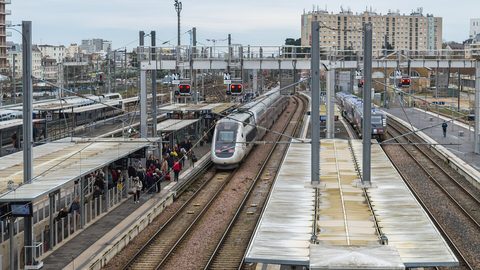 Getting Around Montpellier and Languedoc Wine Country Without Stress
A rental car is essential for inland Languedoc, but Montpellier's trams and regional TER trains serve the coast and cities well.
Getting Around Montpellier and Languedoc Wine Country Without Stress
A rental car is essential for inland Languedoc, but Montpellier's trams and regional TER trains serve the coast and cities well.
-
 French Wine Regions and How a Trip Through Them Actually Works
How to plan a multi-region French wine trip that connects the dots between vineyards without spending every day driving, with Languedoc as the value-driven heart.
French Wine Regions and How a Trip Through Them Actually Works
How to plan a multi-region French wine trip that connects the dots between vineyards without spending every day driving, with Languedoc as the value-driven heart.
-
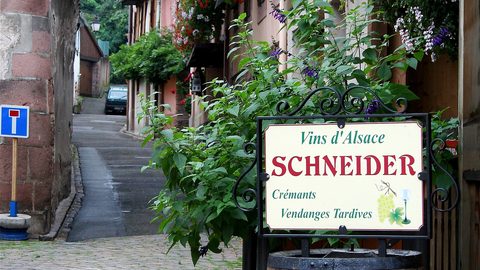 Visiting French Wineries Appointments Etiquette and What It Costs
French winery visits differ sharply from New World cellar doors. Appointments, modest fees, and knowing when to spit are the norm, especially in Languedoc's working domaines.
Visiting French Wineries Appointments Etiquette and What It Costs
French winery visits differ sharply from New World cellar doors. Appointments, modest fees, and knowing when to spit are the norm, especially in Languedoc's working domaines.
-
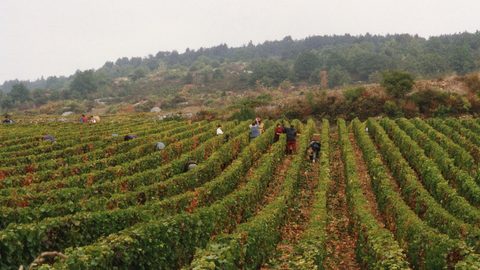 Vendange Harvest Season in France What It Means for Visitors
France's vendange transforms wine regions from late August. Domaines close to visitors, tractors block roads, but the harvest energy is unforgettable if you know where to go.
Vendange Harvest Season in France What It Means for Visitors
France's vendange transforms wine regions from late August. Domaines close to visitors, tractors block roads, but the harvest energy is unforgettable if you know where to go.