A Guide to Eating Around Ajaccio, from the Market to the Mountain Villages
Explore Ajaccio's food scene from the vibrant central market to farm restaurants in the Gravona Valley, focusing on local charcuterie, brocciu cheese, and chestnut flour desserts.
Ajaccio’s Market, Charcuterie and Mountain Village Tables
Your first move is the Ajaccio covered market, Place d'Austerlitz, at 07:30 on any morning except Monday. By 08:00 the queues at the charcuterie stalls already stretch past the cheese tables. You need to know what to buy there, what to order in the hill villages behind the city, and which portside restaurants actually serve what the fishermen land. The generic Corsican food label hides a real divide between coast and interior.
The primary food identity of Ajaccio and its hinterland is the Gravona Valley charcuterie, the chestnut flour desserts of the uplands, and the raw-milk cheeses and honey found in the farms between. A day moving from market to mountain reveals specific dishes, producers, and the wine that pairs with each stop.
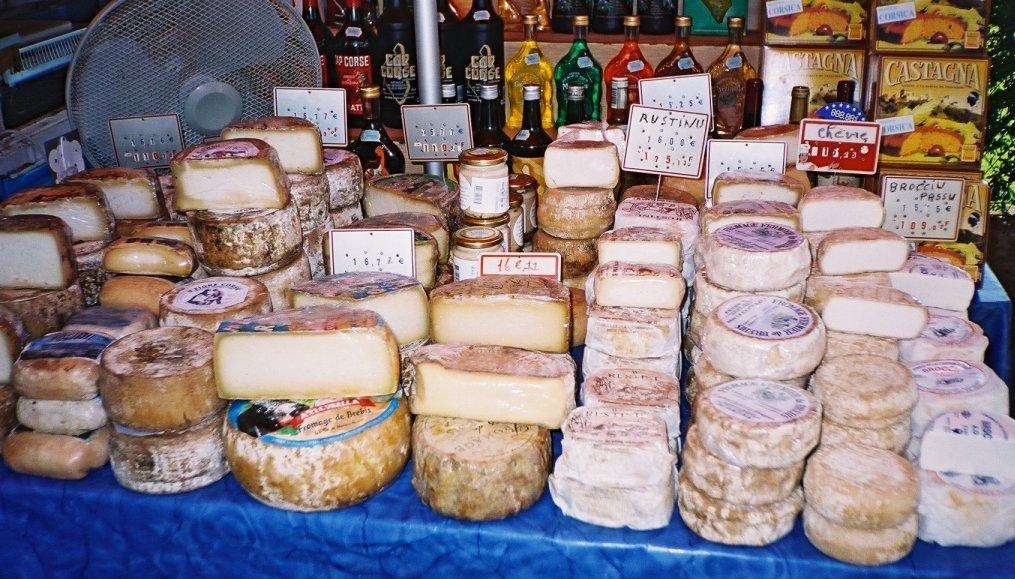

Morning at the Ajaccio Market: Charcuterie and Cheese
What to Buy at the Stalls
At the Place d'Austerlitz market, head for the AOP charcuterie. Corsican charcuterie earned its AOP designation because of the Nustrale pig breed, the only breed used, slaughtered at a minimum 12 months old at a minimum 120 kg carcass weight. Those pigs eat chestnuts and acorns in forest pasture, which gives the meat a nutty, deep flavour no imported pork can mimic.
Buy lonzu, the cured pork loin fillet. Buy coppa, the cured shoulder. Skip the figatellu here unless you have a grill later; it is a smoked liver sausage that demands fire. If you buy it raw, you must cook it within 24 hours or freeze it. A piece costs roughly €6 to €8 at the market.
The Seasonal Fresh Cheese
Brocciu has held AOC status since 1983, but the production season runs only November to June. In summer, you find frozen brocciu, which works for cooking but lacks the fresh, lactic tang of the real thing. The method: whey from sheep or goat milk is heated with whole milk added, producing a fresh curd at minimum 40% fat on dry matter. Eat it within three days of purchase, drizzled with honey from the Gravona Valley apiaries, or buy it to bake into fiadone, the Corsican cheesecake made with this curd.
The honey itself is specific to this area: the maquis shrubland around Ajaccio produces chestnut honey, dark and slightly bitter, and spring-flower honey, lighter. A pot costs €6 to €10 at the market.
Midday in the Gravona Valley: Farm Lunch and Charcuterie Roads
Driving the D1 to the Chestnut Groves
Twenty minutes east of Ajaccio, the D1 road follows the Gravona River into the valley. This is where the charcuterie producers operate. Look for farm sales signs reading "Vente directe" outside stone houses. Most open 09:00 to 12:00 and 15:00 to 17:00; the 12:00 to 15:00 closure is strict. If you arrive at 13:00, you wait or drive to the next village.
The lunch option is a farm table, usually booking required 24 hours ahead by phone. Expect a set menu: soupe corse, the vegetable, bean, and cured meat soup, then a plate of lonzu, coppa, and figatellu grilled over chestnut wood, then veau aux olives, the veal stew with olives, and finally a slice of pulenda, the polenta-like staple made from chestnut flour. The Farine de Châtaigne Corse has held AOP status since 2010. Pulenda is dense, savoury, and eaten warm with the fresh curd or cheese. Price for a farm lunch: €28 to €35 per person, including local wine and water. Cash only at most farms.
Wine Pairing for the Valley
For charcuterie, drink a Patrimonio red or rosé. Patrimonio was the first Corsican AOC, established 1968, and its red and rosé wines use a minimum 90% Niellucciu grape. For the veau aux olives, a Corse Calvi red. For the cheese course, switch to a Vermentinu white from Patrimonio or Cap Corse, minimum 90% Vermentinu grape. The Cap Corse Mattei quinquina, founded 1872, works as an aperitif before the meal.
| Type | Cut | Fat Content | Best Eaten |
|---|---|---|---|
| Lonzu | Pork loin fillet | Lean, dry cured | Sliced thin, uncooked, with bread |
| Coppa | Pork shoulder | Marbled, 25-30% fat | Sliced, room temperature, with olives |
| Figatellu | Pork liver and lean pork | Variable, smoked | Grilled over fire, never eaten raw |
Late Afternoon in the Interior: Chestnut Flour and Wild Boar
Bocognano and the Chestnut Route
Bocognano, a village in the Gravona Valley, is the chestnut capital. In October and November, the village holds a chestnut festival, but the flour is milled year round. Buy a bag of AOP Farine de Châtaigne Corse from the cooperative shop. Use it for nicci, the chestnut flour crêpes, or for cakes and biscuits at home. At the village boulangerie, a nicci costs €2.50.
Wild boar hunting runs September to January annually. During those months, the civet de sanglier (wild boar stew with red wine) appears on menus in Bocognano. The recommended wine pairing is an Ajaccio red, made from the Sciaccarellu grape, or a Sartène red. If you visit outside hunting season, the dish is frozen stock, acceptable but not memorable. Order sanglier en daube instead, braised in wine, which holds better.

Evening Back on the Coast: Seafood and Portside Restaurants
What the Port Catches
By 19:30, the port restaurants on Quai Napoléon and Quai l'Herminier fill. Skip the places with laminated photo menus; they serve frozen langouste at €45 for a half tail. Go to a restaurant where the owner brings the day's catch to your table. The coastal seafood specific to Ajaccio includes langouste (spiny lobster), rouget (red mullet), and loup de mer (sea bass). The high-end dish is langouste grillée au fenouil, grilled lobster with fennel, priced €55 to €75. The regional bouillabaisse, called aziminu, uses local rockfish and is served with rouille on toast, not aioli.
Drink a Vermentinu white from any Corse AOC sub-region with the seafood. With the aziminu, a Patrimonio white works. The Pietra chestnut beer, brewed by Brasserie Pietra since 1996, is a good alternative if you want something darker but not wine.
Who Ajaccio’s Food Scene Suits and Who Should Skip It
Ajaccio’s food scene suits you if you have a rental car, you will eat lunch in a hill village at a farm table, and you distinguish between charcuterie from a Nustrale pig and charcuterie from a supermarket. It does not suit you if you want a single fixed restaurant in Ajaccio with English menus, or if you are travelling July or August without a car and need to eat every meal within walking distance of the port, where prices double and quality halves.
The single thing that goes wrong most often: visitors buy figatellu at the market, store it in a hotel room without refrigeration for 6 hours, then eat it raw, which causes food poisoning. Figatellu must be grilled within 24 hours of purchase, and never eaten uncooked.
Common Questions
Can I visit the Gravona Valley farms without a car?
No. Public transport does not serve the farm roads. You need a rental car. The D1 is the only paved route through the valley, and farm driveways are unpaved and unmarked on GPS.
What happens if I arrive at a farm restaurant without a reservation?
You will be turned away. Farm lunches seat 12 to 20 people and require 24 hour phone booking. Most farms do not answer calls between 12:00 and 15:00. Call the day before, between 09:00 and 11:00.
Is brocciu available in August?
Only frozen. Fresh brocciu is produced November to June. Frozen brocciu works for cooking (fiadone, cannelloni au brocciu, sturzapreti dumplings) but lacks the texture for eating raw with honey. In August, buy pélardon goat cheese instead, which is available year round.
Which portside restaurant serves actual local seafood and not frozen?
Restaurants on Quai l'Herminier facing the marina, rather than Quai Napoléon, are more likely to serve what the boats landed that morning. Look for the chalkboard menu written in French only, no photos, and the words "pêche du jour". Book at 19:00 or eat at 21:00; the 19:30 rush means a 45 minute wait for the kitchen.
What is the one mistake travellers make with Ajaccio food?
Ordering a full charcuterie plate in a port restaurant and expecting the same quality as the valley farms. Port restaurants buy charcuterie from wholesalers, not the Gravona Valley producers. Eat charcuterie at the market or on the farm, not by the water.
Read next
-
 Where to Stay in Ajaccio for a Corsican Wine Trip
Where to stay in Ajaccio for a Corsican wine trip: portside hotels, countryside domaine guest rooms, and Sanguinaires coast options for different trip styles.
Where to Stay in Ajaccio for a Corsican Wine Trip
Where to stay in Ajaccio for a Corsican wine trip: portside hotels, countryside domaine guest rooms, and Sanguinaires coast options for different trip styles.
-
 Best Time to Visit Ajaccio for Wine, Walking and a Quiet Swim
A seasonal guide to visiting Ajaccio and West Corsica, comparing the crowded summer beach months with the ideal spring and autumn windows for wine tasting and hiking.
Best Time to Visit Ajaccio for Wine, Walking and a Quiet Swim
A seasonal guide to visiting Ajaccio and West Corsica, comparing the crowded summer beach months with the ideal spring and autumn windows for wine tasting and hiking.
-
 Getting Around Corsica Car Rental Roads and Driving Tips
Getting around Corsica for a wine trip: why a rental car is essential, how to book an automatic in advance, and what to expect on the D80 Cap Corse corniche and mountain roads.
Getting Around Corsica Car Rental Roads and Driving Tips
Getting around Corsica for a wine trip: why a rental car is essential, how to book an automatic in advance, and what to expect on the D80 Cap Corse corniche and mountain roads.
-
 French Wine Regions and How a Trip Through Them Actually Works
How to plan a multi-region French wine trip that connects the dots between vineyards without spending every day driving, with Languedoc as the value-driven heart.
French Wine Regions and How a Trip Through Them Actually Works
How to plan a multi-region French wine trip that connects the dots between vineyards without spending every day driving, with Languedoc as the value-driven heart.
-
 Corsica vs Sardinia Wine Two Island Wine Cultures Compared
Corsica or Sardinia for a wine trip: comparing the AOC and DOC systems, Patrimonio versus Cannonau, and the driving routes across two distinct island wine cultures.
Corsica vs Sardinia Wine Two Island Wine Cultures Compared
Corsica or Sardinia for a wine trip: comparing the AOC and DOC systems, Patrimonio versus Cannonau, and the driving routes across two distinct island wine cultures.