A Four-Day Road Trip Through Corbières and Minervois Wine Country
Plan four days through Corbières and Minervois, with village stops, realistic drives, cellar bookings, regional food, and welcoming overnight bases.
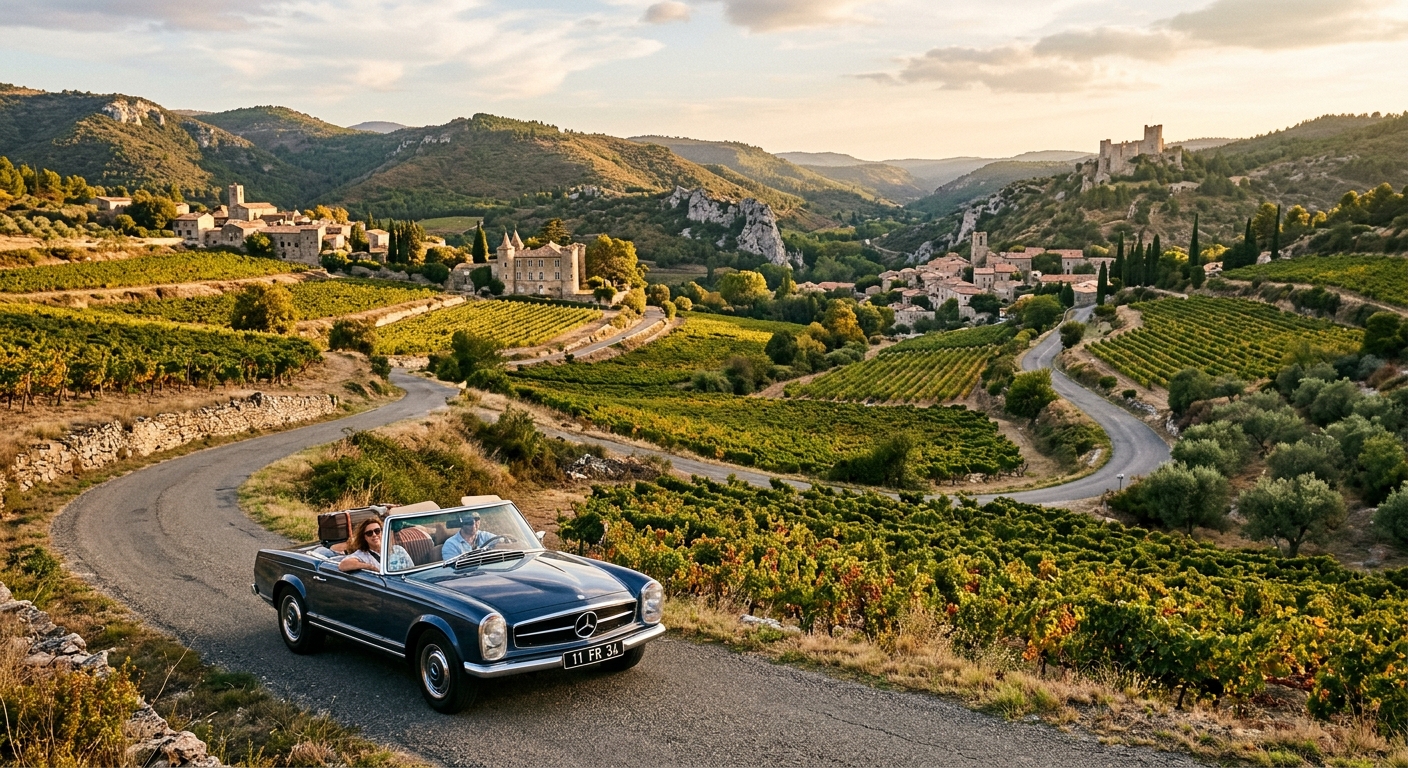
The temptation starts at the first vineyard junction. One road leads toward a stone village. Another disappears between vines. By lunchtime, a simple journey can become three cellar visits and a missed restaurant booking. Give Corbières and Minervois four days instead. Start in Narbonne, spend two nights in Lagrasse, then cross into Minervois for a night in Caunes-Minervois. You will have time for growers, proper lunches, and villages that deserve more than a photograph through the windscreen.
Your Four-Day Route: Travel from Narbonne through Fontfroide, Boutenac, and Gasparets to Lagrasse. Spend the second day around Lagrasse and nearby wine villages. On day three, cross the Aude valley toward Homps, La Livinière, and Caunes-Minervois. Finish through Félines-Minervois, Minerve, and Olonzac before returning to Narbonne. Reserve one main tasting each day, keep lunch unhurried, and use Lagrasse for two nights and Caunes-Minervois for the third. All driving estimates exclude stops, parking, and delays.
Set Up the Trip Around Cellar Appointments
This route assumes four full days and access to a car from the first morning. Arrive in Narbonne the evening before if you need to collect a rental vehicle. A late arrival followed by paperwork can swallow the first cellar appointment.
The drive times below are planning estimates for ordinary conditions. Village approaches, tractors, roadworks, and finding the correct estate entrance can add time. Leave at least 15 minutes between your expected arrival and a tasting reservation. Check the actual route once your accommodation and cellar addresses are confirmed.
Book in this order:
- Reserve accommodation. Choose two nights in Lagrasse and one in Caunes-Minervois, ideally within walking distance of dinner.
- Arrange one main cellar visit per day. Give the date, group size, preferred language, and available time window. Ask about duration, tasting fees, and whether a vineyard or cellar tour is included.
- Book meals around those appointments. Confirm restaurant opening days and your accommodation's arrival arrangements, especially outside summer.
A tasting room and a working cellar offer different experiences. Ask what the appointment covers before building the afternoon around it. For driving days, nominate a driver who does not drink. Ask for a spittoon and save bottles for dinner after the car is parked.
Day One: Narbonne to Lagrasse Through Boutenac
Start With Food in Narbonne
Begin at Les Halles de Narbonne in the morning. This is a useful place to assemble lunch before entering smaller villages with fewer food options. Buy bread, cheese, olives, and fruit that can handle a few hours in a cool bag. Ask which cheeses are made locally rather than assuming every stall product comes from the surrounding hills.
Leave time for coffee before driving toward Fontfroide. Allow roughly 25 to 30 minutes from central Narbonne, depending on traffic and your starting point. Keep luggage out of sight before reaching visitor car parks.
Make Fontfroide the Morning Stop
Give the abbey about 90 minutes to two hours if you want a substantial visit. Its stone buildings provide a useful pause before an afternoon focused on wine. Garden access varies with the season, so check the day's arrangements rather than planning around a full garden circuit.
If you also want a wine appointment here, confirm it separately from admission to the abbey. Then reduce the afternoon programme. Trying to fit two lengthy visits before lunch makes the rest of the day unnecessarily tight.
Continue Through Boutenac and Gasparets
Allow approximately 30 to 40 minutes from Fontfroide to Boutenac, depending on the chosen road. Continue toward Gasparets for a booked tasting at Château La Voulte Gasparets, subject to confirmation. This puts a specific grower visit at the centre of the afternoon rather than leaving you to knock on closed doors.
The estate publishes separate harvest opening hours for September and October. That is a useful reminder that harvest access can change even at an established tasting room. Reconfirm your appointment close to departure and ask whether production work affects the visit.
From Gasparets, allow around 35 to 45 minutes to Lagrasse. Aim to arrive with time to park, check in, and walk before dinner. Choose a chambre d'hôtes or small hotel with clear parking instructions. Historic village streets can make the final few hundred metres more complicated than the main drive.
For dinner, look for lamb, a bean dish, or seasonal vegetables on the menu. A local red makes more sense here than chasing an elaborate pairing. Reserve a table within walking distance of your room.
Day Two: Lagrasse, Ribaute, and Fabrezan at Village Pace
Give Lagrasse a Proper Morning
Stay in Lagrasse for the morning instead of immediately returning to the car. Walk the lanes, cross the bridge, and leave time beside the Orbieu. If an abbey visit matters to you, check which section you intend to enter and its current admission arrangements. Do not assume every part operates under one ticket or timetable.
Have lunch in the village before the afternoon tasting. Restaurant kitchens may serve within a defined lunchtime window. A booking is more useful than hoping to eat after a visit that runs late.
Take a Modest Afternoon Wine Loop
Drive from Lagrasse to Ribaute in about 10 minutes, then allow another 15 to 20 minutes toward Fabrezan. Arrange a visit with a producer near one of these villages in advance. Give the grower your overnight base and ask for the best entrance to use. An estate's postal address may lead to an office or family house rather than the tasting room.
This is a good day to ask practical questions about vineyard work. What changes between the valley floor and higher parcels? Which jobs are happening this week? Those conversations often explain the landscape more clearly than a long sequence of wines.
Return from Fabrezan to Lagrasse in roughly 20 to 25 minutes. Keep the evening free for another village dinner. Two nights in one room removes a packing session and gives you a useful buffer if a grower can only receive you on the second day.
Keep Directions and Confirmations Within Reach
Before crossing into Minervois, download offline maps covering the whole route, including the roads around Minerve and Caunes-Minervois. Save cellar entrance pins, accommodation addresses, and booking confirmations on your phone. An eSIM can help you access directions and confirmations when a suitable mobile connection is available. Check device compatibility and the relevant service details before departure. Keep offline copies too, since rural stretches and thick stone buildings can interrupt connectivity.
Day Three: Cross Into Minervois Through Homps and La Livinière
Break the Journey at Homps
Leave Lagrasse after breakfast and allow approximately 45 to 55 minutes to Homps. The route crosses the Aude valley before reaching the Canal du Midi. Stop for a canal-side walk and coffee, or make this your lunch stop if your tasting is booked later.
Homps provides a change of pace after the tighter roads around Lagrasse. Keep the stop simple. You still have a wine village and a new overnight base ahead, and a leisurely canal lunch can easily fill the middle of the day.
Book the Afternoon Near La Livinière
Allow around 15 to 20 minutes from Homps to La Livinière. Reserve a tasting here or in nearby Siran. Choose one estate and give it enough time. A 60 to 90 minute appointment is a sensible allowance, though the producer should confirm the actual duration.
Ask to taste wines that help explain the estate's own vineyards. You do not need a technical vocabulary. Questions about the slopes, old vines, and harvest decisions give the conversation a useful direction. Buy only what you can transport sensibly, and keep bottles away from direct sun.
For lunch or dinner, look for duck, lamb, goat's cheese, or a vegetable dish built around what is in season. These are menu possibilities rather than promises of what every village restaurant serves. If you want cassoulet, seek out a restaurant that prepares it regularly and allow time for a substantial meal.
Sleep in Caunes-Minervois
From La Livinière, allow roughly 20 to 30 minutes to Caunes-Minervois. Arrive by late afternoon for a walk through the old centre. Its abbey and marble heritage give you something worthwhile to do after the tasting without adding another long drive.
Book a room near a confirmed dinner option. A rural domaine stay can be lovely, but check whether it serves an evening meal and whether that meal requires advance notice. If dinner involves driving elsewhere, factor that into who tastes and who drives.
Day Four: Félines-Minervois, Minerve, and Olonzac
Make Room for One Last Grower
Drive from Caunes-Minervois to Félines-Minervois in approximately 15 to 20 minutes. Arrange a morning visit with a producer in the surrounding area, or use this time for a village walk if three tasting days have been enough. Leave space for packing purchases and checking your onward journey.
Continue toward Minerve, allowing around 30 to 40 minutes from Félines-Minervois. The approach becomes part of the day rather than a transfer to rush through. Follow signed visitor parking instead of asking your navigation app to take you into the historic centre.
Park Above Minerve and Walk In
The municipality's visitor access guidance directs most visitors to designated parking outside the village. The upper car park operates throughout the year, while the lower parking area can be reserved for coaches during the visitor season. Check the current arrangements before arrival, particularly if anyone in your group needs accessible entry.
Allow at least 90 minutes for the village and viewpoints, plus lunch. Wear shoes with grip. The sloping streets and uneven surfaces deserve more attention than sandals usually allow.
Keep gorge walking optional. Heat, rain, and local restrictions can change what is sensible or accessible. A dry riverbed is not an invitation to walk anywhere you please. Follow marked routes and current notices, and stay in the village if conditions are uncertain.
Finish Through Olonzac
Allow about 15 to 20 minutes from Minerve to Olonzac. Stop for food shopping or a final café break before returning to Narbonne, roughly another 40 to 50 minutes away. If you have a train to catch, add time for refuelling, rental return, and reaching the platform.
A late departure suits this route better than an early afternoon connection. For an early train, spend your final night in Narbonne and shorten the village programme instead of relying on a perfect run.
Adjust the Route to the Season
Late spring and early autumn can suit this itinerary, but neither guarantees open doors. Harvest dates vary by estate, grape, and year. Late summer and autumn visits need particular flexibility because picking and cellar work take priority.
- Spring: Confirm restaurant days and cellar appointments. Bring a light waterproof layer and expect some outdoor plans to depend on recent rain.
- Summer: Walk early, reserve lunch, and keep water in the car. Check local notices before entering trails or woodland during periods of fire risk.
- Harvest: Reconfirm visits shortly beforehand. Accept a shorter tasting or a revised time if production work changes the grower's availability.
- Winter: Build shorter days around confirmed appointments. Check heating, dinner availability, and seasonal closures before booking a rural room.
Leave With Time for the Last Village
The best part of these four days may be the hour you never booked. A conversation in a cellar. Bread and cheese beside the canal. A second walk through Lagrasse after dinner. Keep one main tasting as each day's anchor, then let the villages fill the gaps. Corbières and Minervois reward that pace, and you will spend more of the trip enjoying wine country than watching the arrival time on your phone.